

Quick answer
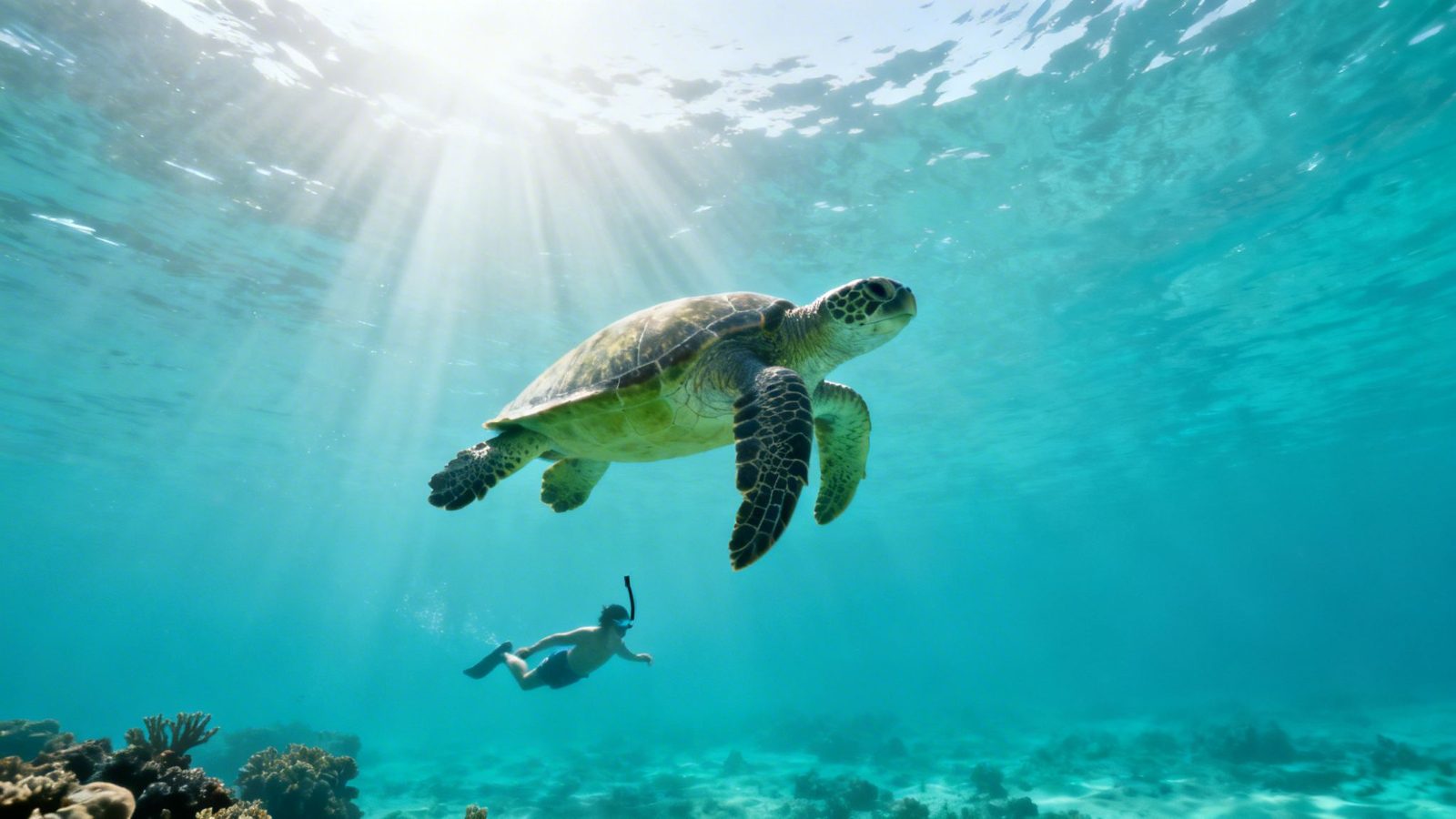
Snorkeling Oahu turtles is best between 10:30 and 15:00, when calm water and strong daylight increase visibility and turtle activity. Laniakea Beach on the North Shore offers the highest encounter probability, with honu grazing on limu in the shallows. Federal law requires snorkelers to maintain a 10-foot distance from all sea turtles—touching, chasing, or blocking their path carries fines up to $25,000.
Hawaiian green sea turtles spend roughly 90 percent of daylight hours foraging on algae beds in shallow coastal zones, making Oahu one of the few places where shore snorkelers reliably encounter them without boat access. The North Shore's reef-sheltered bays and Waikiki's nearshore ledges provide the combination turtles prefer: rocky substrate thick with limu kohu and limu manauea, water depths between six and fifteen feet, and minimal surge. Laniakea Beach, located at mile marker 21 on Kamehameha Highway in Haleiwa, anchors the island's turtle-snorkeling reputation. The bay's limestone reef runs parallel to shore, creating a natural corridor where honu graze and rest. Visibility here ranges from 30 to 60 feet on calm days, and the sandy entry requires no rock scrambling. Electric Beach near Kahe Point and the outer reefs at Hanauma Bay also produce consistent sightings, though both demand stronger swimming skill due to depth and current. Waikiki's Queen's Beach and the wall at Sans Souci offer urban alternatives with smaller resident populations. Federal protections under the Endangered Species Act govern all interactions. Snorkelers must stay at least ten feet from turtles in the water and twenty feet from animals hauled out on sand. That perimeter is not a suggestion—rangers and conservation officers patrol high-traffic beaches and issue citations for harassment, defined as any behavior that alters the animal's natural movement or resting pattern. Honu show little fear of humans, which increases the risk of accidental violation when a turtle swims toward a snorkeler unprompted. The rule holds regardless of who closes the distance. Water clarity and turtle behavior both peak during the midday window. Morning shore breaks and afternoon trade-wind chop reduce visibility and push turtles into deeper refuges. Entry is free at all public beaches, though Hanauma Bay charges a conservation fee for non-residents and closes Tuesdays for ecosystem recovery. Snorkeling Oahu turtles requires no permit, but respecting the 10-foot boundary and letting the animal dictate proximity keeps the encounter legal and the population undisturbed.
“Hawaiian green sea turtles spend roughly 90 percent of daylight hours foraging on algae beds in shallow coastal zones, making Oahu one of the few places where shore snorkelers reliably encounter them without boat access.”
The Best Time for Snorkeling Oahu Turtles
The best arrival window is 10:30–15:00, which provides the optimal balance of daylight, calm water conditions, and turtle activity. Planning your visit during these hours increases the likelihood of observing turtles while ensuring better visibility for snorkeling.
Summer months (May–August)
Moderate to highCalm waters, 80°F–85°F. Warmer water temperatures encourage more frequent turtle activity near the shore.
Winter months (November–February)
ModerateVariable surf, 75°F–78°F. North Shore swells may increase, necessitating attention to daily ocean conditions.
Weekday afternoons
Low to moderate—
Visiting mid-week during the afternoon provides quieter conditions and consistent opportunities for sightings.
Verdict: The optimal window for visiting is daily between 10:30–15:00, particularly during the shoulder months of April or October when crowds are manageable and water conditions are favorable.
Entrance Fees for Snorkeling Oahu Turtles
Access to the snorkeling areas at this location is provided at no cost. Visitors do not pay admission fees, though independent costs such as equipment rentals or parking may apply.
Rules for Snorkeling Oahu Turtles
Green sea turtles are federally protected under the Endangered Species Act and Hawaii state law. Violating marine life protection regulations can result in fines up to $100,000 and prison time.
Do
- Maintain a minimum distance of 10 feet from turtles at all times
- Float quietly and let turtles approach you if they choose
- Report harassment or touching of turtles to NOAA enforcement
- Use reef-safe sunscreen to protect marine habitat
- Watch for turtles surfacing to breathe and give them space
Don't
- Touch, chase, or corner turtles in the water or on shore
- Block a turtle's path to open water or breathing access
- Feed turtles or attempt to interact with them
- Dive directly down toward turtles or make sudden movements
- Use flash photography within 10 feet of marine life
Snorkeling Oahu Turtles Checklist
Prepare the right gear and sun protection to make the most of your time in the water with Oahu's green sea turtles.
-
Pack reef-safe sunscreen — Chemical sunscreens harm coral reefs and are banned in Hawaii.
-
Bring or rent a quality mask and snorkel — Properly fitted equipment prevents leaks and ensures clear underwater visibility.
-
Wear a rash guard or wetsuit — Protects from sun exposure and minor scrapes without needing excessive sunscreen.
-
Secure waterproof storage for valuables — Theft from unattended cars at beach access points is common.
-
Check tide and surf forecasts — Calmer conditions between 10:30–15:00 offer safer snorkeling and better turtle sightings.
-
Confirm transportation and parking options — Limited roadside parking fills quickly, especially on weekends.
Check availability
Common questions about snorkeling oahu turtles
Everything you need to know about snorkeling oahu turtles